


Summary
The South Bronx in New York City faces significant environmental challenges, including some of the highest asthma rates in NYC, nearly three times the city average. Contributing factors include heavy traffic congestion from bridges, industrial facilities, highways, and trucking operations. Communities in the North Shore of Staten Island also experience disproportionately high rates of asthma largely due to proximity to waste facilities, extreme energy burden and diverse community demographics. Staten Island has long been referred to as the forgotten borough, which is demonstrated in the significant data gaps in health and environmental indicators.

Air quality models currently used in New York City rely on accurate pollution data to produce reliable results. However, gaps in emissions records can lead to misleading information, which often affects underrepresented communities and understudied neighborhoods. Local organizations like South Bronx Unite (SBU), the Staten Island Urban Center (SIUC) and the Air Quality Program at the New York City Department of Health and Mental Hygiene are working to address these issues. A key challenge, identified through these groups and student-led research within the Columbia Climate School’s Building Climate Justice course, is the lack of complete pollution data at local, state, and federal levels — especially in these affected areas. Research confirms that these data gaps reduce the accuracy of air quality models, impacting local, regional and global policy decision-making.
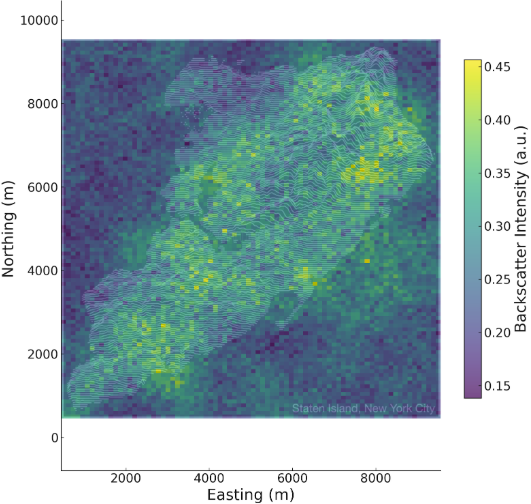
New technologies, like powerful ground-based light detection and ranging (LiDAR), coupled with hyper-local physics based models, could help to identify additional sources of pollution and improve emissions records, thereby making other air quality models more reliable.
The project will work with community stakeholders to test how well this technology works and whether it can be applied in different locations. The instrument will be temporarily stationed in each of the collaborating communities for continuous data monitoring of particulate matter. The results, including describing the deployment site requirements, will then be integrated with physics-based models and compared with existing emissions records for validation and expansion. The enhanced inventories will support informed environmental policymaking, community health and equity in NYC, and offer the potential to be scaled to other cities globally.
Partners:
- South Bronx Unite (SBU)
- Staten Island Urban Center (SUIC)
- Air Quality Program, New York City Department of Health and Mental Hygiene
Team
-

Kytt MacManus
Columbia UniversityProject LeadRead Full Bio arrow_right_altKytt MacManus is a geospatial data scientist and educator with over 15 years of experience at the intersection of remote sensing, environmental policy, and urban sustainability. He...
-
Paul Gallay
Columbia UniversityProject LeadRead Full Bio arrow_right_altPaul Gallay directs the Resilient Coastal Community Project, a partnership between the Columbia Climate School’s Center for Sustainable Urban Development and the New York City...
-

Marco Giometto
Columbia UniversityProject LeadRead Full Bio arrow_right_altMarco Giometto is an assistant professor in the Civil Engineering and Engineering Mechanics department at Columbia University and an Amazon Scholar. He studies both fundamental and...
-

Gregory Yetman
Columbia UniversityProject LeadRead Full Bio arrow_right_altGreg Yetman is associate director for the Geospatial Applications Division at CIESIN. He is a geographer specializing in the application of geographic information system...