


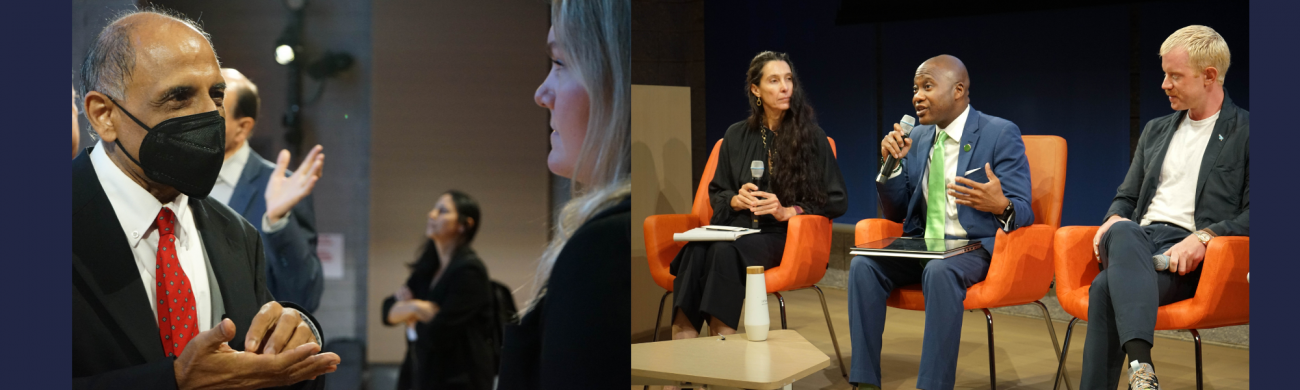
Columbia World Projects (CWP) in partnership with SciensWater, the Columbia Climate School and the Columbia Water Center, hosted the conference Ensuring America’s Water Security: Designing, Financing & Managing Infrastructure for Climate Adaptation to discuss the urgent challenges facing water systems in the United States. The meeting brought together representatives from a range of sectors, including significant participation from federal government agencies and the private sector - illustrating the complexity and commitment to tackling challenges related to water quality, infrastructure, security and climate.
An aging and failing system cannot withstand the effects of climate change and is already failing residents, farmers and businesses while disproportionately impacting residents in low-income rural areas and communities of color. Members from government, industry, academia, philanthropy and the private sector came together to explore how existing technologies and newly available public funding can be optimized to ensure water security for all. Panelists discussed long-term policy and governance solutions, highlighting the need for community engagement and new forms of collaboration across sectors.
Conversations were organized around the following sessions.
- The Water Opportunity Now
- Developing a National Strategy: What is the Federal Government Doing?
- Major Challenges to Water Delivery and Safety
- The View from the Top: Key Macro Trends in the U.S. Water Market
- The Problem in Jackson, Mississippi
- Technology’s Role in Supporting Industry Research Efforts to Adapt to an Uncertain Water Future
- Academia’s Role in Supporting Industry Research Efforts to Adapt to an Uncertain Water Future
- Successfully Building and Growing a Water Infrastructure Business
- Drought in the West: The Failure of Agriculture?
Exciting solutions are being generated by the private sector and through technological innovations and panelists were careful to caution that equitable implementation was imperative to addressing the challenge. Urban solutions will need to center on policy and funding, and rural solutions on training local talent, such as the Navajo Nation plumbing certification program, Building a Talent Pipeline.
Closing the conference, Professor Upmanu Lall of the Columbia Water Center urged, “we need to think about the consumer - farmers, residents, businesses. Policy and governance are key to making sure the solutions are what everyone deserves”.
Through its Transforming Wastewater Infrastructure in the United States project, CWP is working to understand and create tools that illustrate the dimensions and demographics (particularly race and income) of inequity in access to water and wastewater infrastructure nationally, as well as the social implications of access or lack of access. In Alabama, as the team prepares to install their first decentralized system, they are researching barriers and opportunities related to management entities and working to identify sustainable management systems and providers for the new systems.
Recordings of the sessions can be accessed here.