


Summary
Rapid urbanization, water scarcity, and climate change are an increasing reality for cities worldwide. Bengaluru, India, is one such example.
Situated on a plateau and far away from any river or ocean, the city has relied on historical human made "chains of lakes" to catch and store monsoon water, recharging shallow and deep aquifers. These lake chains that were once central to the city’s water management system have fallen into disrepair and encroachments, diminishing their capacity to capture monsoon water, recharge aquifers, support irrigation, and mitigate floods.
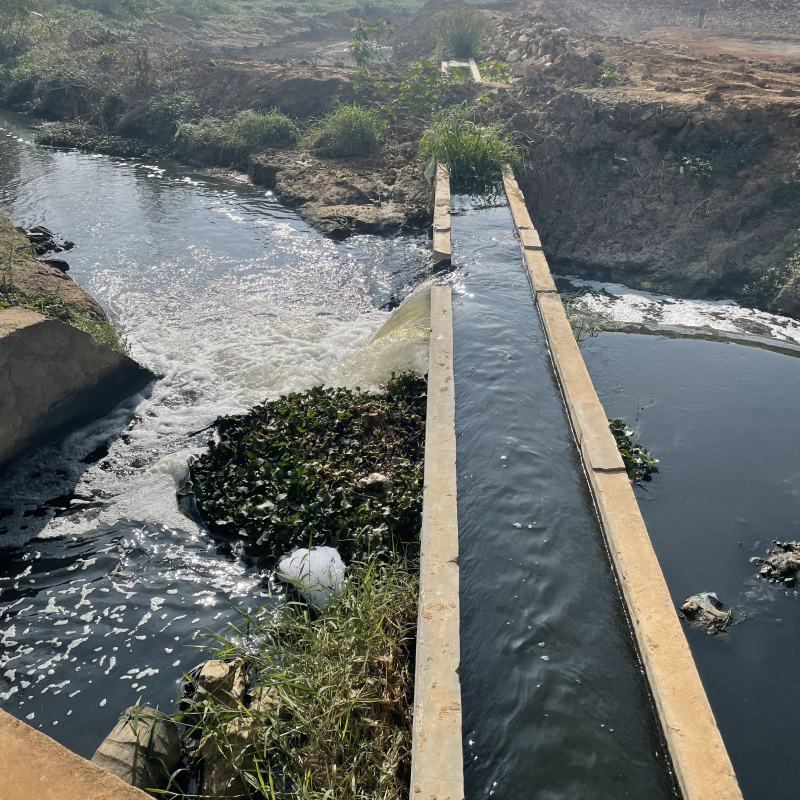
Further, the deep aquifers underneath this water-stressed city are increasingly contaminated with toxic metals that pose a serious threat to public health and the environment. This contamination, coupled with the over-extraction of groundwater, is exacerbating the city’s water scarcity, alongside its paradoxical opposite: significantly recurring flooding.
There is an urgent need for sustainable solutions that address these challenges while fostering equitable water access for all, as Bengaluru’s peri-urban areas face a critical intersection of water scarcity, rapid urbanization, and climate vulnerability. A circular water economy, rooted in the reactivation of these lakes and the integration of modern wastewater recycling technologies, presents a transformative pathway to enhance water security and climate resilience.
A multi-disciplinary team of researchers, local government agencies, and community organizations explored the viability of a circular water economy for Bengaluru’s peri-urban growth. A holistic urban design approach, or “Watershed Urbanism” framework, was applied to the watershed management corresponding to each of Bengaluru's "chain of lakes." The approach was also informed by knowledge about the presence of toxic metals and excess nutrients and their respective impacts on human and non-human health. The project also integrated community-led climate education to build awareness and engagement around sustainable water use.
The overarching goal of this pilot initiative was to lay the groundwork to be able to improve water quality and availability in Bengaluru’s peri-urban areas, with the aim of translating this climate mitigating, adaptive, and resilient paradigm for water management to ultimately provide a scalable model for other cities and regions around the world.
Partners:
Collaborators:
- Friends of Lakes
- Dr. Champaka Rajagopal, The Urban School, Sciences Po
Team
-

Kathrin Schilling
Columbia UniversityProject LeadRead Full Bio arrow_right_altKathrin Schilling is an Assistant Professor of Environmental Health Sciences at Columbia University’s Mailman School of Public Health and an Associate Member of the Herbert...
-
Anirban Basu
Columbia UniversityProject LeadRead Full Bio arrow_right_altAnirban Basu is an environmental isotope geochemist specializing in groundwater chemistry, metal contamination, and their impacts on human health. He is currently a Research...
-

Sonal Beri
Columbia UniversityProject LeadRead Full Bio arrow_right_altSonal Beri is an Adjunct Associate Professor at Columbia GSAPP. Educated both in India and the USA, as an architect and urban designer, she has 25 years of professional...
-

Sandro Marpillero
Columbia UniversityProject LeadRead Full Bio arrow_right_altSandro Marpillero is a co-founding principal of Marpillero Pollak Architects (MPA) and Adjunct Associate Professor at Columbia GSAPP. He has also taught design studios and...
-

Radhika Iyengar
Columbia UniversityProject LeadRead Full Bio arrow_right_altRadhika Iyengar is a research scholar and the Director of Education at the Center for Sustainable Development, Climate School, Columbia University. She leads the Education for...